


China’s embassy in Tajikistan has advised all Chinese businesses and workers to immediately evacuate the sensitive Afghanistan–Tajikistan border regions following two deadly cross-border attacks in late November that left five Chinese citizens dead.
The first attack occurred on November 26, when three Chinese nationals were killed at a compound operated by Shohin SM, a private Chinese gold-mining firm in the Shamsiddin Shohin district of Khatlon Region. Tajikistan’s Ministry of Foreign Affairs stated that the assault originated from across the border in Afghanistan and involved both firearms and a drone equipped with a missile. The attackers were described as “criminal groups” based in Afghanistan, though no organisation was officially named. Some accounts also noted the use of drones dropping explosive devices.
Taliban authorities in Afghanistan condemned the incident, stating that preliminary assessments suggested the involvement of actors aiming to fuel instability and mistrust among regional countries.
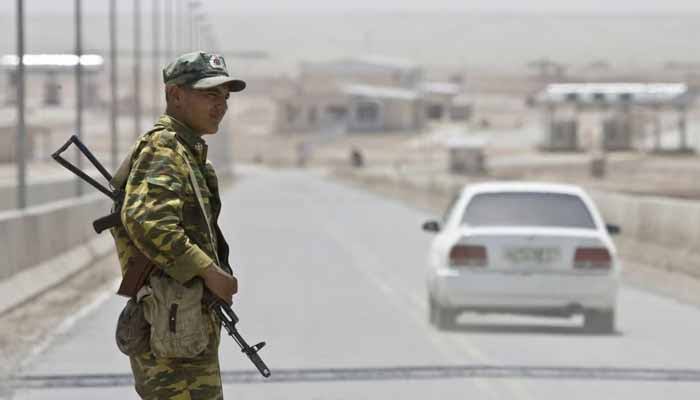
Just four days later, on November 30, two more Chinese workers—employees of China Road and Bridge Corporation—were killed in Shodak village in Tajikistan’s Darvoz district, located in the Gorno-Badakhshan Autonomous Oblast (GBAO). According to Tajikistan’s Border Troops, the attackers were “members of an armed terrorist group” who crossed into Tajik territory from several villages in Afghanistan’s Badakhshan Province. The second attack took place around 6:45 p.m. local time.
Both incidents were traced back to Afghanistan’s Badakhshan Province. Following the second attack, Taliban authorities announced the arrest of two individuals allegedly involved in the cross-border assault.
In the aftermath of the first attack, a Taliban delegation led by the governor of Badakhshan Province and a senior border forces commander traveled to Tajikistan for discussions, though Tajik authorities did not publicly confirm the visit.
Tajikistan has maintained a cautious stance toward the Taliban since their return to power in 2021 and was initially the most reluctant Central Asian state to formally engage with the new Afghan leadership. While Dushanbe had previously extended some support to anti-Taliban factions, it has gradually recalibrated its approach amid shifting regional dynamics and the Taliban’s consolidation of control.
This recalibration has included handing over the Afghan consulate in Khorog in March 2023 and conducting official exchanges, such as a high-level Tajik delegation’s visit to Kabul on November 15.
The recent attacks on Chinese enterprises along the frontier are expected to accelerate Tajikistan’s engagement with the Taliban as both sides attempt to manage growing security concerns along one of Central Asia’s most volatile border zones.