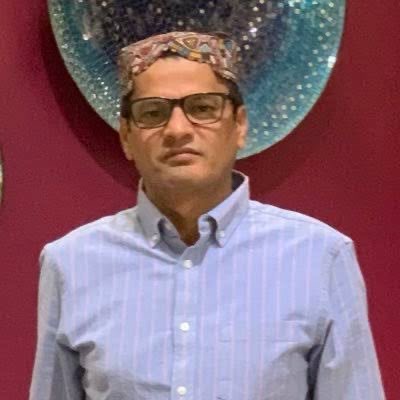
By Zafar Sahito
The renewed debate over creating a separate Karachi or “urban Sindh” province has intensified concerns among Sindhi nationalist groups, which argue that the proposal goes far beyond administrative efficiency and threatens the historical, cultural and territorial integrity of Sindh.
Supporters of a separate province maintain that Karachi’s vast population and complex civic challenges require an independent administrative structure. Sindhi nationalists, however, see the proposal as part of a broader struggle over political authority, economic resources and control of Pakistan’s largest commercial centre.
From a Sindhi nationalist perspective, any proposal to divide the province must be examined in the context of Pakistan’s federal structure, Karachi’s economic importance and the relationship between central institutions and provincial governments.
Sindh, nationalists argue, is not merely a modern administrative unit. Its identity is deeply connected to the Indus River, the Sindhi language, archaeological sites such as Mohenjo-daro and Kot Diji, Sufi traditions and centuries of regional history.
Although Sindh’s political boundaries have changed across ancient, medieval, colonial and modern periods, the region possesses a strong civilisational and territorial continuity that predates the creation of Pakistan.
The issue is particularly sensitive because of Sindh’s modern political history. The province was separated from the Bombay Presidency in 1936, while the Sindh Legislative Assembly became the first provincial legislature in British India to support the creation of Pakistan through a resolution adopted in 1943.
Nationalists consequently ask why Sindh, which entered Pakistan as a distinct political unit, should be divided without the consent of its people.
The controversy also recalls the One Unit system introduced in 1955, under which Sindh and other western provinces were merged into a single province of West Pakistan. Sindh’s separate provincial institutions were restored after the arrangement was abolished in 1970. For many Sindhis, proposals to separate Karachi revive memories of provincial reorganisation imposed from the centre.
At the heart of the dispute is Karachi’s extraordinary economic significance. The city houses Pakistan’s principal port infrastructure, financial institutions, corporate headquarters, industries and major commercial networks. A separate province would substantially alter control over these institutions and the revenues generated by the city.
The demand has long been associated with urban Sindh politics, particularly the Muttahida Qaumi Movement tradition. The MQM-P has framed the proposal as a question of better governance, political representation and the rights of people living in Karachi and other urban centres.
Sindhi nationalists fear that creating such a province could transform an urban political identity, historically associated with Urdu-speaking Muhajir communities, into a permanent territorial arrangement.
Supporters counter that Karachi is a multiethnic metropolis and that a new province could be organised around equal citizenship rather than ethnic ownership. They also contend that its size, population and administrative difficulties justify a separate governing structure.
Another major concern is the balance between provincial autonomy and federal power. Pakistan has experienced long periods during which military governments and central institutions exercised extensive influence over provincial affairs. Nationalists therefore view any attempt to redraw Sindh’s boundaries through the broader lens of centralisation.
A proposal that weakens the political coherence of a major provincial centre and creates smaller units could change the balance of power between Islamabad and the provinces. Critics of the division consequently fear that it would reduce Sindh’s influence within the federation.
Punjab’s political weight also features prominently in the debate. Sindhi nationalists argue that population-based representation and the concentration of state institutions have historically given Punjab disproportionate influence.
However, Punjab’s population and its people should not be treated as synonymous with Pakistan’s military establishment or federal authority. The issue more precisely concerns the political, military and bureaucratic institutions operating within a state whose demographic centre of gravity has long been influenced by Punjab.
The debate also reflects a conflict between different ideas of identity. Sindhi nationalism is primarily territorial, historical and cultural. It emphasises Sindh’s ancient identity, language, Sufi traditions, the Indus River and the political rights of its people.
Islamist political movements, by contrast, generally place greater emphasis on a broader Pakistani and Islamic identity. Sindhi nationalists allege that some religious organisations have been encouraged by powerful state institutions to weaken secular and territorial nationalism. Such allegations remain politically contentious and require independent evidence.
The Pakistan Peoples Party occupies an especially complicated position. It has built much of its political strength in Sindh by championing provincial autonomy and invoking the legacy of Zulfikar Ali Bhutto and Benazir Bhutto.
At the same time, the PPP is a national party operating within the federal political system. Its participation in coalition governments and negotiations over ministries, appointments and resources has led nationalist groups to question whether it can be relied upon to resist territorial changes.
For Sindhi nationalists, the strongest objection goes beyond individual political parties. It is based on the principle that Sindhis should not be treated as tenants in their historic homeland.
Sindh’s cultural history predates the Pakistani state by thousands of years. While the Indus Valley Civilisation cannot simply be equated with any single modern ethnic group, the archaeological and cultural heritage of Sindh remains profound.
Mohenjo-daro, Kot Diji, the Indus River, Sindhi language, Sufi literature and centuries of regional political history provide the foundations of contemporary Sindhi identity. The nationalist case is therefore not that Sindh’s present borders have remained unchanged for thousands of years, but that the territorial and cultural idea of Sindh has far deeper roots than Pakistan’s modern provincial system.
The post-Partition transformation of Karachi remains another sensitive aspect of the dispute. Millions of people crossed the newly created India-Pakistan border, and Urdu-speaking migrants became an integral part of Karachi’s economic, cultural and political life.
Their contribution to the city cannot reasonably be denied. Sindhi nationalists nevertheless argue that migration and demographic change should not be converted into claims of territorial ownership or used to justify carving a new province out of Sindh.
The controversy ultimately involves several overlapping conflicts: provincial autonomy versus federal centralisation, Sindhi territorial nationalism versus urban Muhajir political identity, metropolitan governance versus provincial authority, control over Karachi’s resources and historical identity versus contemporary demographic realities.
Sindh should not be reduced to a political bargaining chip or divided merely in the name of administrative convenience. Any attempt to alter its territory without the consent of its people is likely to provoke strong political resistance.
For Sindhi nationalists, Sindh remains a historic homeland rather than an administrative unit whose boundaries can be redrawn to accommodate temporary political interests.
(Writer is President ,Jeay Sindh Freedom movement)