By C. Rajeev
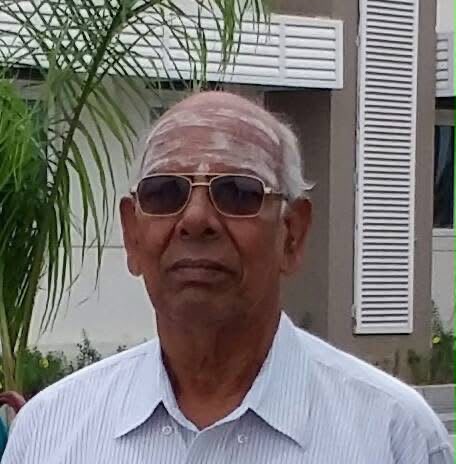
At an age when most people would prefer a quiet life, Seshagiri Visvanathan remains closely associated with institutions serving the sick, educating children and caring for elderly people in distress.
The 89-year-old former Chief Electrical Engineer of Indian Railways has devoted more than three decades to expanding affordable healthcare, education and social support for underserved communities. His work has centred on a simple philosophy: Vaidya and Vidya—healthcare and education.
Born on December 5, 1936, Visvanathan began his professional journey on the technical floor of Indian Railways. Starting as a foreman and technical supervisor, he gradually rose through the organisation and retired as Chief Electrical Engineer in 1994.
Alongside his official responsibilities, he was actively involved in railway employees’ welfare. He served as branch president of the South Eastern Railwaymen’s Congress from 1968 to 1975 and later as its central vice-president. Between 1977 and 1979, he worked as an adviser to bodies dealing with railway workers’ classification and cadre restructuring.
His second innings began after retirement. Rather than withdrawing from public life, Visvanathan turned his attention to the healthcare and educational needs of disadvantaged families.
One of his earliest initiatives was a “one-rupee clinic” in Chennai. With the support of like-minded doctors and pharmaceutical companies, the clinic treated common ailments and provided patients with medicines for three days. The modest initiative subsequently developed into a multispeciality hospital offering treatment at highly subsidised rates.
Visvanathan also helped establish a multispeciality hospital in Kancheepuram with dialysis facilities and a rural healthcare centre at Thandalam. These institutions were designed to take medical services closer to people who could not afford treatment in private hospitals or travel long distances for specialised care.
His most extensive contribution has been in eye care. In 2004, he helped establish the Sankara Eye Hospital at Pammal as a charitable institution. The hospital provides a substantial proportion of its cataract operations free of cost.
Through the “Kannoli” programme and associated Sankara eye hospitals in Samarjhola in Odisha and Saharsa in Bihar, more than two million people have reportedly been screened for visual impairment. Over four lakh eye operations, mainly cataract surgeries, have also been performed.
Recognising that eye problems among children often remain undetected, the institutions introduced the “Vaanavil” initiative. The programme has conducted free vision screening for more than four lakh schoolchildren, enabling those with eye conditions to receive timely treatment.
Visvanathan’s commitment to education developed alongside his healthcare work. Beginning with a Sankara school in Pammal, he became closely involved in the administration and development of 16 Sankara schools across Tamil Nadu. Together, these institutions have educated more than 50,000 children.
His approach extended beyond running schools. He recognised that charitable hospitals required a dependable pool of qualified and compassionate healthcare professionals. This led to the establishment of the Sankara Nursing College for Women in Kancheepuram and the Sri Jayendra Saraswati Institute of Optometry in Chennai.
The institutions provide professional education to young people while supplying trained nurses and optometrists to hospitals and eye-care centres. Visvanathan has also served on the executive council of Sri Chandrasekharendra Saraswathi Viswa Mahavidyalaya in Kancheepuram, contributing to its administrative and academic development.
Another important area of his work is elderly care. As managing trustee of three aged-care centres in Tamil Nadu, he has helped provide shelter, medical assistance and dignified living conditions to senior citizens requiring support.
Visvanathan’s journey represents a transition from public service within the Railways to community service through a network of social institutions. His experience as an administrator and workers’ representative enabled him to mobilise professionals, coordinate organisations and build systems capable of continuing beyond individual acts of charity.
Visvanathan attributes all his achievements to the blessings of Mahaperiyavar, Jagadguru Sri Chandrasekharendra Saraswathi Swamigal, and the Guruparampara of the Kanchi Kamakoti Peetam. He regards their spiritual guidance as the abiding inspiration behind his decades of service in healthcare, education and social welfare.
Even as he approaches his 90th year, Visvanathan remains connected to the institutions he helped develop. His life’s work demonstrates how spiritual inspiration, disciplined administration, institutional planning and sustained public service can bring healthcare, education and dignity within reach of millions.