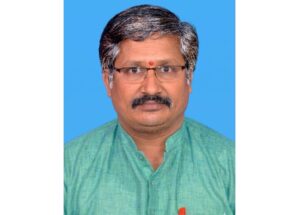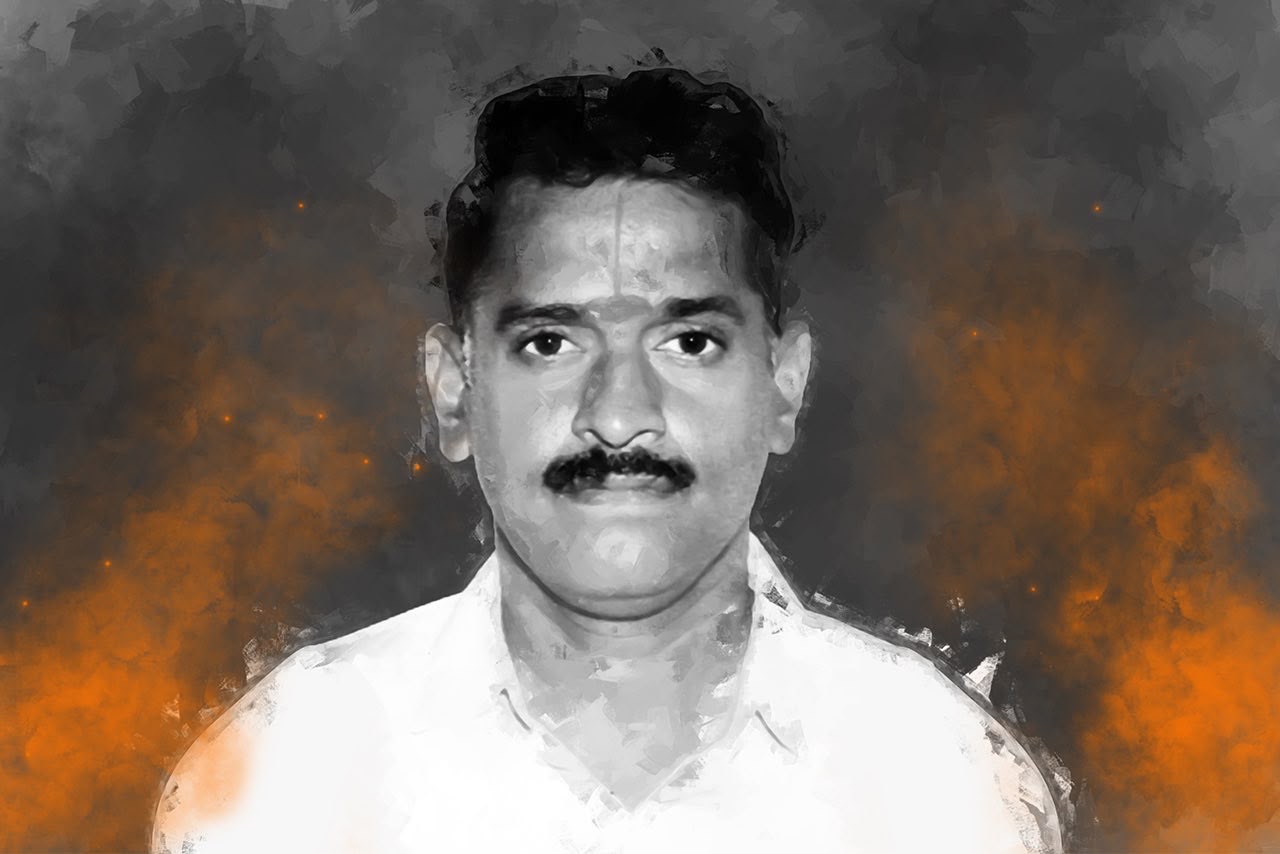
Madurai, Nov 28: The lighting of the sacred lamp at the Deepathoon atop the Tirupparankundram hill on Saturday, following a Supreme Court directive and amid tight security provided by the Central Reserve Police Force (CRPF), has revived memories of advocate Rajagopalan, a Hindu Munnani leader who spearheaded a campaign for the ceremony more than three decades ago.
Rajagopalan, who served as the second state president of the Hindu Munnani, was murdered on October 10, 1994, in Madurai, where he practised as a lawyer.
Known for his simple lifestyle and trademark white khadi attire, Rajagopalan was actively involved in mobilising public support for lighting the Karthigai Deepam at the hilltop stone pillar.
A father of three sons, he personally participated in grassroots campaigns, raised funds, organised awareness programmes and worked alongside Hindu Munnani cadres to highlight the demand.
As part of his campaign, Rajagopalan undertook a padayatra from Pazhamudircholai to Tirupparankundram, another of the six sacred abodes of Lord Murugan. He also travelled by bicycle through villages surrounding Madurai to mobilise public support.
According to accounts of the campaign, Rajagopalan faced police action, including lathi charges and imprisonment, during the agitation.
However, he was unable to witness the fulfilment of his demand. On October 10, 1994, Rajagopalan was murdered outside his residence. Police subsequently named six individuals as accused in the case.
Historical accounts associated with the movement suggest that efforts towards a negotiated settlement emerged barely 25 days after his death. However, administrative disagreements and prolonged legal disputes prevented the issue from being resolved.
Saturday’s lighting of the lamp, 32 years after Rajagopalan’s murder, marked a significant milestone in the decades-long controversy surrounding the Deepathoon.
For Hindu Munnani functionaries and supporters of the campaign, the implementation of the Supreme Court directive also served as an occasion to remember Rajagopalan and his role in sustaining the movement during its formative years.