Chennai, March 19 ,2025
The southern bench of the National Green Tribunal (NGT) has on Wednesday (March 19) issued an interim stay against the Tamil Nadu Pollution Control Board’s (TNPCB) notice demanding ₹73 crore in environmental compensation from Chennai Petroleum Corporation Limited (CPCL) for the December 2023 Ennore oil spill.
The bench, comprising Justice Pushpa Sathyanarayana and expert member Sathyagopal Korlapatti, directed CPCL to either pay 50% of the compensation—approximately ₹19 crore—or provide a bank guarantee for the amount within four weeks to proceed with its appeal.
During the hearing, CPCL’s legal counsel argued that TNPCB had calculated the compensation amount before a full assessment of the oil spill’s extent. Taking this into account, the bench issued an interim stay on TNPCB’s notice and scheduled the next hearing for June 4.
The TNPCB had initially ordered CPCL to pay ₹73.68 crore, citing socio-economic and environmental damages caused by the spill. The board warned of stringent action, including the closure of CPCL operations and electricity supply suspension, if the company failed to comply.
The TNPCB explained that IIT Madras had conducted an environmental impact assessment of the Ennore Creek spill, and a technical team reviewed its findings.
The assessment estimated that 517 tonnes of oil had leaked. The environmental damage cost was calculated based on a methodology developed by the Institute of Marine Environment and Resources, Vietnam.
The total compensation of ₹73.68 crore was divided as follows, ₹35.43 crore for socio-economic damages and ₹38.24 crore for environmental damage
These funds would be used for restoration efforts, preventive measures, and long-term environmental monitoring.
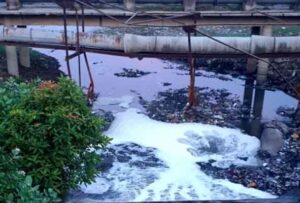
On December 4, 2023, a major oil spill occurred at CPCL’s refinery in Ennore, Tamil Nadu. Around 10 tonnes of heavy oil leaked into the Buckingham Canal and Ennore Creek, causing significant pollution in the Bay of Bengal and disrupting local livelihoods.
CPCL reported that it had removed 2,20,040 litres of oil-water mixture and 663.5 tonnes of oil-laden soil from the affected areas. The company also cleaned over 1,100 houses and shops that had been stained by the spill.
The NGT held CPCL responsible for the spill and directed TNPCB to assess the damage while recommending measures to prevent future incidents.
Six studies, including research by IIT Madras and other institutions, were initiated to evaluate the spill’s impact. In September 2024, IIT Madras submitted a report recommending several preventive measures ,elevating oil storage tanks , enhancing containment systems ,improving drainage infrastructure, dredging silted canals to increase capacity and reduce contamination risks
Additionally, a technical team comprising experts from TNPCB, CSIR-NEERI, the Central Pollution Control Board, Anna University, and the Indian Coast Guard reviewed the findings.
The team estimated that over 400 kilolitres of oil had dispersed and found that bio-dispersants from the National Institute of Oceanography (NIO) in Goa had significantly aided ecosystem recovery.
They also recommended optimizing the bioremediation process and conducting long-term research to evaluate its effectiveness.
With the interim stay in place, CPCL has four weeks to comply with the tribunal’s directive before the next hearing on June 4.
Meanwhile, the ongoing studies and expert recommendations will play a crucial role in determining the final environmental restoration strategies.