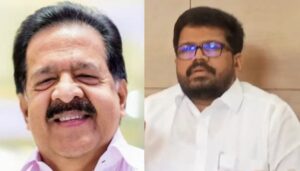
THIRUVANANTHAPURAM, June 14: A political controversy erupted in Kerala on Sunday after BJP state president Rajeev Chandrasekhar strongly criticised Chief Minister V.D. Satheesan for condemning the participation of three university Vice-Chancellors in an RSS centenary programme addressed by RSS Sarsanghchalak Mohan Bhagwat.
The row began after Satheesan described the Vice-Chancellors’ presence at the event as a “serious lapse” and said it was inconsistent with the dignity of their offices and Kerala’s educational traditions. The Chief Minister said Vice-Chancellors occupy positions that command respect in society and should remain above ideological affiliations.
Satheesan argued that attending a programme featuring the head of an organisation he accused of promoting communal ideology was inappropriate for those heading universities. He also maintained that any action perceived as encouraging communalism would not be accepted and called upon the three Vice-Chancellors to apologise to the people of Kerala.
Responding sharply, Chandrasekhar accused the Chief Minister of double standards on secularism and constitutional values. In a social media post, the BJP leader alleged that the UDF government depended on the support of parties and organisations such as the Indian Union Muslim League and Jamaat-e-Islami.
“Someone who is in power because of the support of the Muslim League and Jamaat-e-Islami must not lecture others about secularism or respect for the Constitution,” Chandrasekhar said.
He further alleged that Satheesan was attempting to intimidate Vice-Chancellors for attending a public programme with Bhagwat, stressing that the RSS is a lawful organisation and that participation in its events does not violate any law.
Chandrasekhar also accused both the Congress and the CPI(M) of using opposition to the RSS and BJP as a tool for vote-bank politics in Kerala. He claimed that such tactics were losing effectiveness as more Malayalis were openly expressing nationalist sentiments and support for the RSS.
The exchange has intensified the debate over the role of university administrators in public life and the extent to which academic leaders should engage with organisations associated with political or ideological movements.